
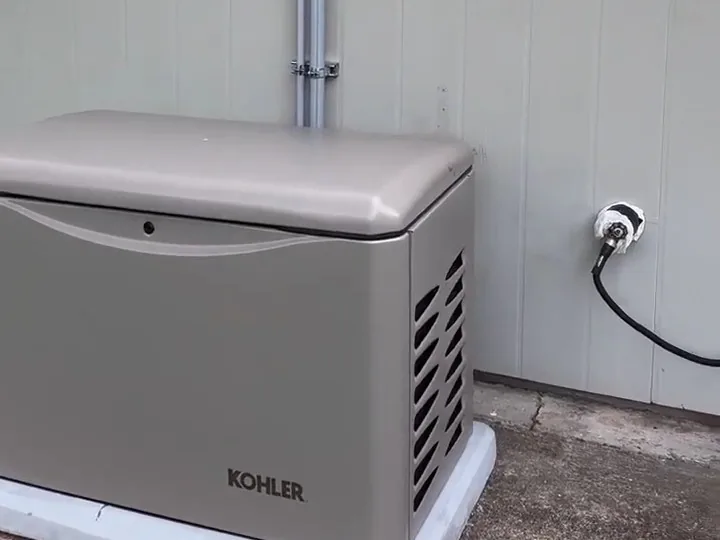
Whole-House Generator Cost in Houston: 2026 Price Guide
Most homeowners pay $1,513 to $8,805 to install a whole-house generator, and the average is $5,158, per HomeAdvisor’s 2026 data. HomeGuide’s 2026 guide runs higher, at $6,000 to $11,000 installed on average. Where a Houston house lands depends on the generator size, the gas line run and whether the panel needs work.
We are VCS Construction and Remodeling, and we have been contracting in Houston since 2007. When we do a standby generator installation, one contractor handles the whole job. That covers the pad, the gas line from the meter, the transfer switch wiring and both permits. The prices below come from national cost guides, and your own number comes after a free estimate.
How much does a whole-house generator cost by size?
The generator alone runs $4,000 to $6,000 for a 17 to 20 kW unit, per HomeGuide. That size covers a full 1,500 to 3,000 square foot home in HomeGuide’s table. Bigger units cost more: HomeGuide lists 22 to 25 kW at $4,500 to $12,000. Labor and the other line items come on top.
| Generator size | What the guide says it covers | Unit price | Source |
|---|---|---|---|
| 14 to 18 kW | Critical systems, 1,500 to 3,000 sq ft home | $4,000 to $5,500 | HomeAdvisor |
| 17 to 20 kW | Full 1,500 to 3,000 sq ft home | $4,000 to $6,000 | HomeGuide |
| 20 to 24 kW | Main systems, 3,000 to 5,000 sq ft home | $5,000 to $6,500 | HomeAdvisor |
| 22 to 25 kW | Full 3,000 to 5,000 sq ft home | $4,500 to $12,000 | HomeGuide |
The HomeGuide rows cover a full home, while the HomeAdvisor rows cover critical or main systems. Both guides pair each size with a house size, but square footage only gets you close. The real size comes from a load analysis of the circuits you want covered.
We list those circuits, starting with the air conditioning, and add up what they draw. A house with two AC systems can need a bigger unit than a same-size house with one. Homeowners often ask about Generac and Kohler by name, and the load analysis sizes either brand.
Houston’s electrical inspection asks for the electrical contractor’s load analysis, per the Houston Permitting Center. It has to show the generator and transfer switch are sized for the loads you chose.
What else goes into the installed price?
Labor comes next, then four line items: the transfer switch, the gas line, the pad and the permits. Angi puts labor and installation at $1,500 to $5,000. HomeGuide puts labor at $3,000 to $5,000 on average. Long runs or units over 20 kW push labor to $5,000 to $12,000 or more, per HomeGuide.
The transfer switch moves the house off the grid and onto the generator when the power drops. HomeGuide prices a transfer switch at $400 to $2,500 installed. Angi figures about $1,200 of the installation cost goes to wiring the transfer switch.
The gas line runs from the meter to the unit. HomeGuide prices gas line installation at $15 to $50 or more per linear foot. A generator set far from the meter needs a longer run, and every foot adds cost.
The unit sits on a pad. HomeGuide prices a 3 to 4 inch pre-cast concrete pad at $150 to $400. Some homes get a pad poured in place instead, and we handle poured concrete pads in the same job.
Permits are a smaller cost. HomeAdvisor puts permits at $50 to $200 each. It says most homeowners need one for the electrical work and another for the fuel line or tank. HomeGuide puts permits at $80 to $450 total.
Will your electrical panel need work too?
Sometimes, and it depends on the panel you have now. The transfer switch gets wired to your electrical panel, and a full or worn-out panel adds work. Angi prices an electrical subpanel upgrade at $500 to $2,000. A new circuit for the generator adds $570 to $1,000, per Angi.
When the main panel has to go, the generator job pairs with an electrical panel replacement. Our electricians handle both, so the panel and the transfer switch get planned together. The numbers for that job are in our Houston panel replacement cost guide.
What do Houston permits and inspections check?
The Houston Permitting Center’s standby generator guide calls for single-trade electrical and plumbing permits. Each trade pulls its own permit, and Houston issues electrical permits only to registered master electricians. We handle both. Master plumbers on our team pull the plumbing permit for the gas line, and we meet the inspectors.
Inspectors verify the fuel lines and the regulator. They also check the BTU rating used to size the gas line back to the meter. The bigger the generator, the more gas that line has to carry. A poured-in-place pad gets a location inspection before the concrete is poured.
The guide also sets distances. The generator has to sit at least 2 feet from the lot line. It needs 5 feet minimum from combustible exterior walls, wood-framed brick veneer included. It needs the same 5 feet from openings in an exterior wall, such as windows, doors and vents.
Those distances decide where the unit can sit. The farther it sits from the meter and the panel, the longer the gas line and wiring run. Houston’s housing mix changes the layout too. The 1920s bungalows in the Heights and Montrose sit on pier and beam, while postwar ranch homes sit on slabs.
An approved generator is not exempt from Chapter 30 of the Houston Code of Ordinances. That chapter covers noise and sound levels.
These checks come from the City of Houston. Bellaire, West University Place, Pearland and the Memorial Villages run their own permit offices.
What does a whole-house generator cost to run each year?
Plan on yearly service plus the gas it burns in an outage. HomeAdvisor says to set aside $80 to $300 a year for a pro to service the generator. HomeGuide puts annual maintenance at $200 to $650. Its figure includes a full inspection plus oil and filter changes.
HomeGuide says a 15 to 20 kW standby unit burns 133 to 330 cubic feet of natural gas per hour. What that costs depends on your gas rate and how long the outage runs.
Can a portable generator do the job instead?
For a few circuits, it can. A portable generator hooks up through an inlet and an interlock kit, and it is the smaller option. Someone has to start it and keep it fueled, and it runs outside. A standby unit starts on its own and runs off your gas line.
We install portable generator inlets and interlock kits as part of our electrical work. If you are weighing the two, ask for both prices at the estimate. Both choices start with the same step: a list of the circuits you want running.
Why do Houston homeowners price a whole-house generator?
Storm outages here can last for days. After Hurricane Beryl, a Category 1 storm, CenterPoint crews were chasing down 2.26 million power outages, per the Texas Tribune. The same July 2024 report says CenterPoint had restored power to 1 million customers 55 hours after its response began. The rest waited longer.
Hurricane season comes back every year. The Atlantic season runs June 1 to November 30, per NOAA’s National Hurricane Center. The center puts the peak on September 10.
Pricing a generator before the season leaves time for permits and inspections. We are based near downtown Houston and work inside Loop 610 and out. Call VCS Construction and Remodeling at (713) 828-3097 for a free estimate. We check the panel and the gas meter on that visit, and we set a date after the estimate.